LIFELINE PROJECT
LifeLine
Women and girls in rural communities face a high burden of reproductive health issues such as fibroids, ovarian masses, breast lumps, and cervical abnormalities.
Across rural Nigeria:
Up to 70% of women delay seeking care for gynecological symptoms due to cost or lack of awareness.
Over 60% of reproductive health conditions are detected late, when complications have already developed.
1 in 3 girls (13–25) reports not having access to accurate information about female health.
In Afijio and similar communities, these gaps create avoidable complications, financial hardship, and poor health-seeking behavior among young women and adult women alike.
What Was There Before and Why It Didn’t Work
Before 2025, female-health information in these communities was mostly:
Informal (from friends or unverified sources)
Inconsistent, with no structured learning spaces for girls and young women
Not linked to any support for women facing urgent reproductive health conditions
Limited by cost barriers, leading to delayed diagnosis and prolonged suffering
Because of these limitations:
Preventable cases progressed for too long, worsening outcomes
Girls lacked a safe space to ask questions about their health
Women requiring urgent procedures had no reliable support system
Africarii’s Plan and Approach
Lifeline was designed to directly address these gaps through two clear pathways:
a. Education & Awareness (through Sisters’ Club integration)
Providing structured, stigma-free discussions for girls and young women on:
Female reproductive health
Myths vs facts
Early signs to watch for
When to seek clinical care
Target age group: 13–25 years
b. Direct Financial Support for Critical Female-Health Cases
Fundraising to support women needing urgent gynecological procedures.
Impact Report
2025 (Maiden edition)
a. Surgical Support Provided
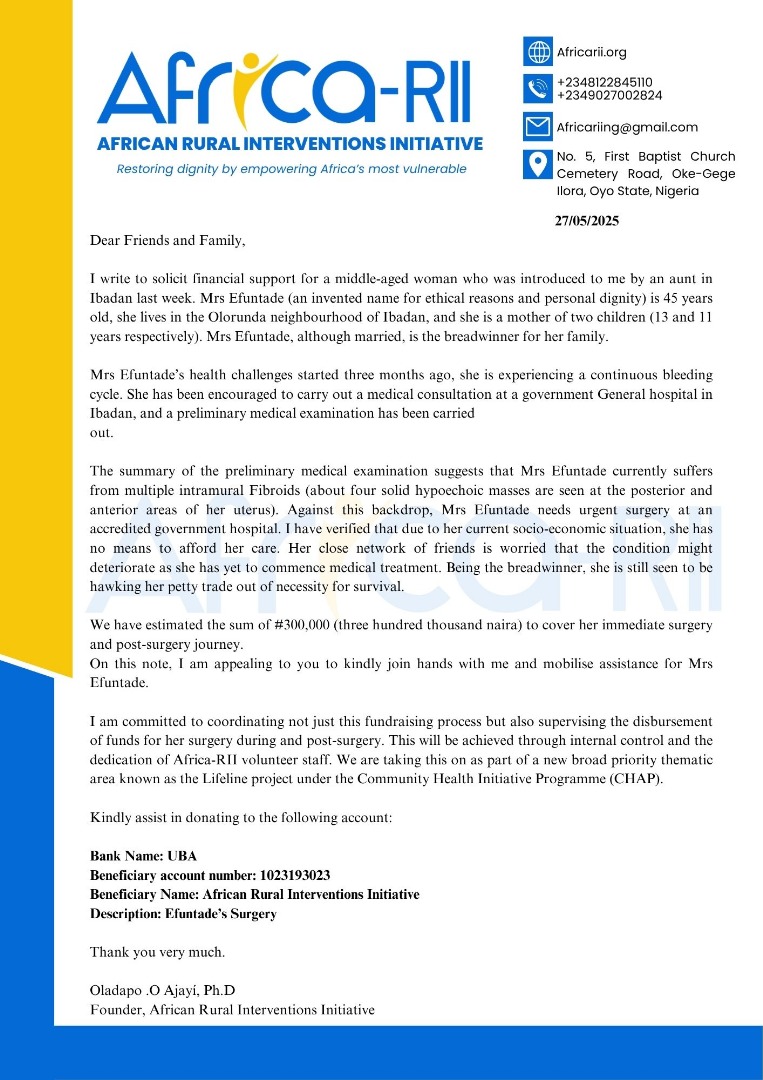
₦150,000 was raised and disbursed to support a woman who required surgery for a uterine fibroid condition (anonymous).
This covered approximately 75–80% of her total surgical cost.
The support ensured no delay in treatment, reducing her risk of further complications.
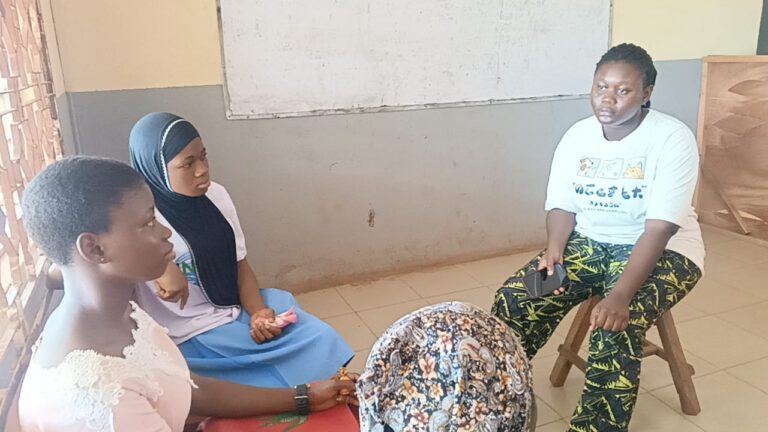
b. Female-Health Education for Girls (Sisters’ Club Collaboration)
12 girls and young women (ages 13–25) participated.
85% reported improved understanding of their female reproductive health.
75% were able to correctly identify at least one early-warning symptom they should not ignore.
70% said the session corrected at least one myth or misinformation they previously believed.
90% stated they felt more comfortable discussing female-health topics after the session.
These improvements demonstrate growth in knowledge, confidence, and early-care awareness among participants.
Looking Ahead
Africarii plans to:
Continue integrating female-health learning into Sisters’ Club meetings
Expand participation to reach 50+ girls and young women across multiple communities
Strengthen the community fundraising model to support more urgent female-health cases
Establish a clearer pathway for guiding women from education → clinic visit → follow-up care.

Become a Part of Our Community
Join us in empowering a brighter future. Donate today and help create a ripple effect of kindness and compassion.Be a part of this movement! Partner with us, donate, or volunteer to help us build a brighter future for the youths living in rural communities.

contact us today

Contact Us
5 First Baptist Church cemetary road, Opposite First Baptist School 2,Oke-gege, Ilora, Oyo State.
- Tel: +234 812 284 5110
- Email: hello@africarii.org
About Us
- Who we are
- Team
- Resource Center
- Donate
- Volunteer
Our Programs
- Education
- CHAP
- YWEP
- Community Resource Center
- GARM